

Diaphragms
Your Professional Diaphragms Supplier
Tianjin Maojie Rubber Products Co., Ltd. is a private enterprise specializing in the integrated design and manufacturing of rubber products. Currently, the company provides customized processing services for rubber and plastic products across various industries. Its main product portfolio includes a wide range of rubber components—such as O-rings, seals, mechanical seals, and gaskets—plastic parts, molded hardware packaging, metal-plastic composites, rubber shafts, rubber rollers, and other specialized rubber products.
Customized Services
The company offers tailored manufacturing solutions based on technical drawings and specifications provided by clients. Upon submission of required documentation, we provide detailed cost estimates. Production proceeds upon client confirmation of pricing and technical requirements.
Free Sample Provision
For products requiring mold development, we offer free sample production following mold fabrication. Samples are delivered to clients for evaluation and approval. Mass production commences only after formal confirmation of sample compliance with specifications.
Advanced Production Equipment
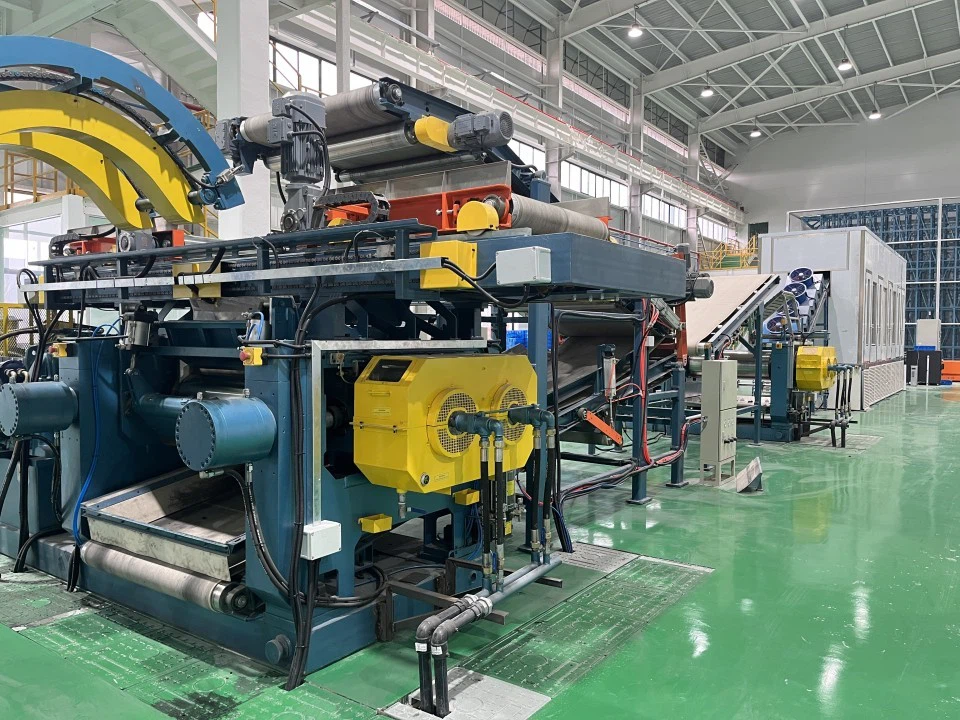
Our production line is equipped with state-of-the-art facilities, including raw material pre-treatment systems, mixing equipment, molding machines, vulcanization units, and post-processing apparatus, ensuring consistent product quality and process efficiency.
High-Quality After-Sales Service
We provide long-term mold maintenance and repair services. Our customer support team maintains regular communication with clients, promptly addresses inquiries, and ensures comprehensive after-sales support throughout the product lifecycle.


Parameter
|
Material |
NR, NBR, HNBR, Viton, EPDM, Silicone,PTFE ...etc |
|
Color |
Transparent, white, black, any pantone color |
|
Hardness |
20-90 Shore A |
|
Sizes |
Customized |
|
Shape |
As your design |
|
Mould Cavity |
Single or multi cavity |
Types of Diaphragms
The diaphragms produced by our company mainly include the following types:
Diaphragm Of Actuator
Its core function is to convert the input compressed air pressure into mechanical displacement, thereby driving the terminal control components such as valves and baffles to act, and ultimately achieving precise regulation of the flow rate, pressure or liquid level of the fluid (liquid, gas, steam).
Pressure Regulating Diaphragms
Their main function is to sense pressure changes through their own elastic deformation and link valves, valve cores and other components to adjust the flow rate of the medium (gas, liquid), ultimately stabilizing the system pressure within the preset range.
High-Temperature Diaphragms
High-Temperature Diaphragms are flexible functional components specially designed for high-temperature working conditions (typically referring to long-term operating temperatures ≥150℃, and in special scenarios, up to over 800℃).

Advantages of Diaphragms
Higher mechanical strength
Tensile strength and tear strength are 30%-100% higher than those of ordinary pure rubber diaphragms (depending on the reinforcing material), and can withstand higher working pressure (usually 0.5-50bar, and special models can reach over 100bar).
Superior fatigue resistance
In dynamic reciprocating motion (such as the piston push of a diaphragm pump), the reinforcing layer can disperse stress, preventing the base material from cracking due to repeated flexing, and the service life is 2 to 5 times longer than that of ordinary diaphragms.
Stable dimensional accuracy
The reinforcing layer restricts the thermal expansion and contraction or pressure deformation of the base material. Especially under high-temperature (such as 150-250℃, fluororubber base material) or low-temperature (such as -60 ℃, silicone rubber base material) working conditions, the dimensional stability is significantly improved.
Retain core functionality
The reinforcing layer does not affect the medium resistance of the base material (for example, fluororubber reinforced diaphragms still resist strong acids and strong alkalis), sealing performance (leakage rate can be as low as 10⁻⁹ Pa · m³/s), and meets the medium compatibility requirements of specific industries.
Applications of Diaphragms
Valves and Pumps:
Pure rubber diaphragms are used to control flow in both manual and automated valves, pumps, and pressure regulators. Their flexibility allows for precise control in applications where maintaining a tight seal is essential.
Automotive Systems:
Pure rubber diaphragms are used in automotive carburetors, brake boosters, and fuel pumps. It is used to control air or fuel mixtures and maintain pressure stability.


Industrial Equipment:
In hydraulic and pneumatic equipment, pure rubber diaphragms control pressure and ensure leak-proof operation in aggressive environments.
Water Treatment Systems:
Rubber diaphragms are used in valves and pumps for water filtration and purification processes, ensuring accurate control over water pressure and flow.

Different Materials of Rubber Diaphragms
Silicone Rubber (VMQ) / Liquid Silicone Rubber (LSR)
Silicone rubber is a material that’s not only resistant against heat up to 480 degrees Fahrenheit or 305 degrees Celsius, but it can withstand lower temperatures as low as -112 degrees Fahrenheit or -80 degrees Celsius.
Fluoro Silicone Rubber (FVMQ)
If you need a rubber diaphragm that’s resistant to liquids like fuel or oil, then FVMQ could be a suitable material for you. The material combines the low-temperature flexibility of silicone with swelling resistance that fluoro rubbers are renowned for.
Chloroprene Rubber (CR)
A flame retardant option for your rubber diaphragm is chloroprene. It’s also resistant to weathering and ozone. Chloroprene rubber has good mechanical properties (tear resistance, elongation at break, tear strength), so it is considered very durable if you require a diaphragm that you don’t want to replace regularly.
EPDM (Ethylene Propylene Diene Monomer Rubber)
Perhaps one of the most popular rubber diaphragm materials, EPDM features solid mechanical properties and strong resistance against UV rays, ozone, and weathering.
Fluoro Rubber and Fluro Carbon Rubber (FPM/FKM)
One of the other popular materials for rubber diaphragms is fluoro rubber. It might not be as flexible as other options that are available, but it is one of the best choices for high-temperature fluids and applications that need resistance against acids, chemicals, fuels, and oils.
Perfluoro Rubber (FFPM/FFKM)
Even though perfluoro rubber is quite expensive compared to other materials, it's compatible with a wide range of applications, including those that feature a high use of chemical ingredients.
Storage Precautions for Rubber Diaphragms
Ideal Temperature Range
The ideal temperature for storing rubber diaphragms is between 20°C and 25°C (68°F - 77°F). Avoid storing them in areas that are subject to large temperature fluctuations, such as near heaters or air - conditioning units.
Humidity Management
Keep the relative humidity between 40% and 60%. You can use a dehumidifier or a humidifier to maintain the appropriate humidity level in the storage area.
Dark Storage
Store rubber diaphragms in a dark place, such as a closed cabinet or a storage room with opaque walls. If possible, use storage containers that block out light.
Avoid Direct Sunlight
Never leave the diaphragms exposed to direct sunlight. If they need to be transported, make sure they are covered with a UV - resistant material.
Packaging and Shipping
|
Packaging |
PE bags+carton |
|
Shipping |
Air freight, Sea freight, Train Express |
Our Factory
The company is located in Tianjin. Since its establishment, the company has continuously cultivated new employees and absorbed innovative ideas.