

Rubber O-rings, as the most widely used sealing elements in the industrial field, their usage quality directly affects the sealing reliability, operational efficiency and service life of equipment. From the perspective of engineering application, this article systematically sorts out the scientific selection methods, standardized installation procedures, key points of regular maintenance and common failure prevention strategies for rubber O-rings. Combined with the material properties and working condition adaptation principles, it provides engineering technicians and related practitioners with both academic and practical usage guidance, helping to reduce the risk of sealing failure.
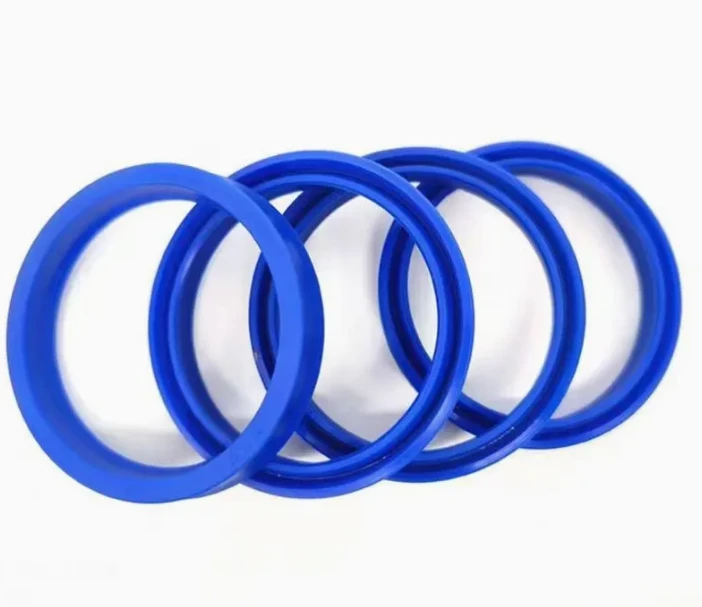
I. Scientific selection: Precise matching based on working conditions and material properties
The core of selecting rubber O-rings is to achieve a three-dimensional fit of "material performance - working condition requirements - structural parameters" to avoid sealing failure due to selection deviation.
1. The working condition parameters dominate the selection direction
Temperature adaptation: Select materials based on the temperature range of the working environment. For low-temperature conditions (-60℃ to -20℃), silicone rubber (VMQ) or fluorosilicone rubber is preferred. For high-temperature conditions (150℃ to 260℃), fluororubber (FKM) is selected. For normal-temperature conditions (-20℃ to 100℃), nitrile rubber (NBR) or chloroprene rubber (CR) can be used.
Medium compatibility: When in contact with non-polar media such as mineral oil and hydraulic oil, nitrile rubber (NBR) is preferred, as its volume swelling rate can be controlled within 10%. When in contact with corrosive media such as strong acids, strong alkalis and strong oxidants, fluororubber (FKM) should be selected. In the fields of food and medical care, silicone rubber (VMQ) that meets the USP Class VI standard should be selected to ensure biocompatibility.
Pressure adaptation: For low-pressure conditions (≤10MPa), conventional O-rings can be selected. For medium and high-pressure conditions (10MPa to 30MPa), retaining rings should be used in combination. For ultra-high-pressure conditions (>30MPa), reinforced structure O-rings should be chosen to avoid extrusion damage.
2. Standardized selection of structural parameters
Cross-sectional diameter and compression ratio: The cross-sectional diameter of the O-ring should be determined based on the size of the sealing groove, and the compression ratio should be controlled within a reasonable range of 15% to 30%. A compression ratio that is too low can easily lead to sealing gaps, while one that is too high will accelerate the fatigue aging of materials and shorten their service life.
Dimensional tolerance: Select O-rings that comply with GB/T 3452.1 or ISO 3601 standards, ensuring that the inner diameter and cross-sectional diameter tolerances are within the allowable range to avoid affecting the sealing effect due to dimensional deviations.
Ii. Standardized Installation: Avoid human damage and sealing defects
The standardization of the installation operation directly determines the initial sealing state of the rubber O-ring. It is necessary to strictly follow the four-step process of "cleaning - fitting - installation - inspection".
1. Preparations before installation
Cleaning treatment: Thoroughly clean the sealing grooves, sealing surfaces and the surface of O-rings to remove oil stains, iron filings, dust and other impurities to prevent impurities from embedding into the sealing surfaces and causing scratches.
Surface lubrication: According to the compatibility of the medium, select the appropriate lubricant (such as silicon-based grease, fluorine-based grease), and evenly apply it to the surface of the O-ring and the inner wall of the sealing groove to reduce the friction during installation and prevent the rubber material from cracking due to excessive stretching.
Tool preparation: Use dedicated installation tools (such as plastic fixtures, guide sleeves), and avoid direct contact of sharp metal tools with O-rings to prevent scratches or punctures on the rubber surface.
2. Standardize installation operations
When installing, avoid excessive stretching of the O-ring (stretching rate ≤5%) to prevent damage to the molecular structure of the material. For prefabricated seals, it is necessary to ensure that the O-rings are fully embedded in the grooves without distortion or offset.
For reciprocating motion sealing scenarios, it is necessary to ensure that the fit clearance between the O-ring and the moving parts is reasonable to avoid excessive movement due to too large a clearance or excessive friction due to too small a clearance.
3. Inspection after installation
Visually check whether the O-ring fits the groove completely, without wrinkles or damage. Verify the sealing effect through air tightness tests or pressure tests to ensure there is no leakage.
Iii. Regular Maintenance: A key measure to Extend Service Life
The core of maintaining rubber O-rings lies in regular monitoring and timely intervention to delay material aging and prevent the decline of sealing performance.
Regular monitoring and record-keeping
Establish a maintenance ledger and regularly inspect the appearance condition of O-rings, including whether there are any phenomena such as cracking, hardening, swelling, or deformation. For key equipment, a sealing performance test (such as pressure holding test and leakage detection) should be conducted every 3 to 6 months.
Record the changes in working condition parameters (such as temperature fluctuations, medium composition adjustments, and pressure peaks), promptly assess the impact on the performance of O-rings, and predict maintenance requirements in advance.
2. Targeted maintenance measures
For O-rings that are constantly exposed to high-temperature and high-pressure conditions, shorten the maintenance cycle and replace them every 12 to 24 months to prevent seal failure caused by material aging.
If the working environment contains aging factors such as ozone and ultraviolet rays, protective measures should be taken for the sealed parts (such as installing protective sleeves), or materials with excellent ozone resistance, such as chloroprene rubber (CR) and fluororubber (FKM), should be selected.
Avoid storing O-rings in a compressed state for a long time. When storing, place them flat in a cool and dry environment, away from heat sources, oil stains and corrosive substances to prevent premature aging.
Iv. Failure Control: Common Failure Modes and Solutions
The failure of rubber O-rings is often related to factors such as material aging, improper adaptation to working conditions, and installation damage. Targeted prevention and control measures need to be taken.
Common failure modes and causes
Compression set: Long-term high temperature or high compression ratio leads to the destruction of the cross-linked structure of rubber molecular chains and the loss of sealing stress, which mostly occurs in the long-term use of nitrile rubber (NBR) under high-temperature conditions.
Chemical swelling and cracking: Incompatibility between the material and the medium leads to abnormal volume expansion of the O-ring and material brittleness and cracking. This is commonly seen when nitrile rubber comes into contact with polar solvents or fluororubber comes into contact with specific strong oxidants.
Mechanical damage: Scratches during installation, excessive stretching, or extrusion damage and friction wear under working conditions, manifested as cracks, notches or uneven thickness on the surface of the O-ring.
Thermal aging and ozone aging: High-temperature environments cause oxidation and degradation of rubber molecules, manifested as hardening and cracking. In an ozone environment, non-ozone-resistant materials are prone to surface cracks, especially in dynamic sealing scenarios.
2. Targeted prevention and control and solutions
For permanent compression deformation: Optimize the compression ratio design to avoid over-range compression; Select materials with excellent aging resistance, such as replacing them with fluororubber (FKM) under high-temperature working conditions.
For chemical swelling and cracking: Re-evaluate the compatibility of the medium and material, and replace the suitable material, such as replacing nitrile rubber (NBR) with fluororubber (FKM) to adapt to corrosive media.
For mechanical damage: Standardize installation and operation, and use dedicated tools; Install retaining rings for medium and high-pressure working conditions. Optimize the roughness of the sealing surface and reduce the coefficient of friction.
For aging failure: Control the working environment temperature to avoid exceeding the material's tolerance range; For scenarios that are vulnerable to ozone, chloroprene rubber (CR) or rubber materials with added ozone-resistant agents should be selected.


