

Can vibration mounts be reused? This is a question that many customers often ask me as a vibration mounts supplier. In this blog, I'll delve into this topic from various scientific and practical perspectives to help you make informed decisions.
Understanding Vibration Mounts
Before discussing the reusability of vibration mounts, it's essential to understand what they are and how they work. Vibration mounts are devices designed to isolate and dampen vibrations. They are commonly used in a wide range of applications, from industrial machinery to automotive engines and electronic equipment. By absorbing and dissipating the energy generated by vibrations, they protect the equipment from damage, reduce noise, and improve overall performance.
There are different types of vibration mounts available in the market, each with its own unique characteristics and applications. For example, the Shock Isolation Bracket is designed to provide high - level shock and vibration isolation in heavy - duty industrial applications. It can withstand large forces and is often used in manufacturing plants where machinery generates significant vibrations.
The Shock - absorbing Ball is another type of vibration mount. It offers excellent flexibility and can be used in applications where multi - directional vibration isolation is required. These are commonly found in automotive suspension systems and some precision electronic devices.
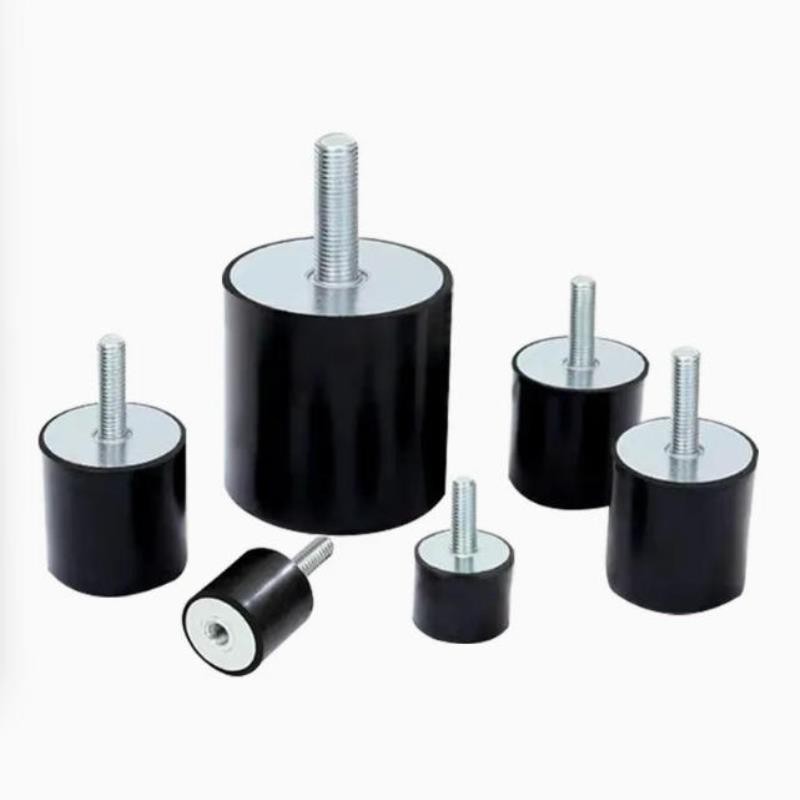
Cylindrical Rubber Mounts are simple yet effective vibration isolation solutions. They are made of rubber and are used in a variety of light - to medium - duty applications, such as small motors and household appliances.
Factors Affecting Reusability
Several factors determine whether vibration mounts can be reused. Let's take a closer look at these factors.

Material Degradation
The material of the vibration mount is a crucial factor. Most vibration mounts are made of rubber or elastomers. Over time, these materials can degrade due to various environmental factors. Exposure to high temperatures, chemicals, and UV radiation can cause the rubber to harden, crack, or lose its elasticity. For example, in an industrial environment where the temperature is high and there are chemical fumes, the rubber in the vibration mount may deteriorate rapidly. If the material has significantly degraded, the vibration mount will not be able to provide the same level of vibration isolation as before, and it is not advisable to reuse it.
Wear and Tear
The amount of wear and tear on the vibration mount also affects its reusability. In applications where the vibration mount is subjected to continuous high - frequency vibrations or heavy loads, it may experience physical damage. This can include abrasion, cuts, or deformation. For instance, in a large manufacturing machine that operates 24/7, the vibration mounts may be worn out due to the constant movement and stress. If the wear and tear are severe, the vibration mount's performance will be compromised, and reusing it may lead to equipment failure or increased noise levels.
Installation and Removal
The way the vibration mount is installed and removed can also impact its reusability. Improper installation can cause damage to the mount, such as over - tightening the bolts, which can deform the rubber. Similarly, rough removal can also lead to physical damage. If the vibration mount has been damaged during installation or removal, it may not be suitable for reuse.
Assessing Reusability
If you are considering reusing a vibration mount, you need to conduct a thorough assessment.
Visual Inspection
The first step is to perform a visual inspection. Look for signs of material degradation, such as cracks, discoloration, or hardening of the rubber. Check for any physical damage, like cuts, abrasions, or deformation. If you notice any significant issues during the visual inspection, it's likely that the vibration mount cannot be reused.
Performance Testing
In addition to visual inspection, you can also conduct performance testing. This can involve measuring the vibration isolation performance of the mount. You can use vibration sensors to measure the amount of vibration transmitted through the mount before and after a period of use. If the vibration isolation performance has significantly decreased, it may not be advisable to reuse the mount.
Benefits of Reusing Vibration Mounts
If the vibration mounts pass the assessment and can be reused, there are several benefits.
Cost Savings
Reusing vibration mounts can save you a significant amount of money. Instead of purchasing new mounts, you can use the existing ones, which reduces the overall cost of maintenance and operation. This is especially beneficial for large - scale industrial applications where the number of vibration mounts required is high.
Environmental Sustainability
Reusing vibration mounts is also environmentally friendly. By reducing the demand for new products, you can help conserve natural resources and reduce waste. This aligns with the growing trend of sustainable manufacturing and operation.
When to Replace Vibration Mounts
Even if the vibration mounts can potentially be reused, there are situations where replacement is necessary.
Safety Concerns
If the vibration mount has been damaged to the extent that it poses a safety risk, such as a cracked mount that may suddenly fail and cause equipment malfunction or injury, it should be replaced immediately.
Critical Applications
In critical applications where precise vibration isolation is required, such as in medical equipment or aerospace applications, it is often recommended to use new vibration mounts. These applications demand the highest level of performance and reliability, and reusing mounts may not meet the strict requirements.
Conclusion
In conclusion, whether vibration mounts can be reused depends on various factors, including material degradation, wear and tear, and installation and removal. By conducting a thorough assessment through visual inspection and performance testing, you can determine if the mounts are suitable for reuse. Reusing vibration mounts can offer cost savings and environmental benefits, but in some cases, replacement is necessary for safety and performance reasons.
If you have any questions about vibration mounts, their reusability, or if you are interested in purchasing new vibration mounts for your applications, please feel free to contact us. We are here to provide you with professional advice and high - quality products.
References
- "Vibration Isolation Handbook", John Wiley & Sons
- "Rubber Technology: Compounding, Mixing, and Testing", Hanser Publishers


